Pepper
Pepper is a 120 cm wheeled humanoid designed by Aldebaran for SoftBank and launched in June 2014 as a social robot for shops, banks and homes. About 27,000 were built before production paused in 2020. It is the most widely deployed social humanoid to date.
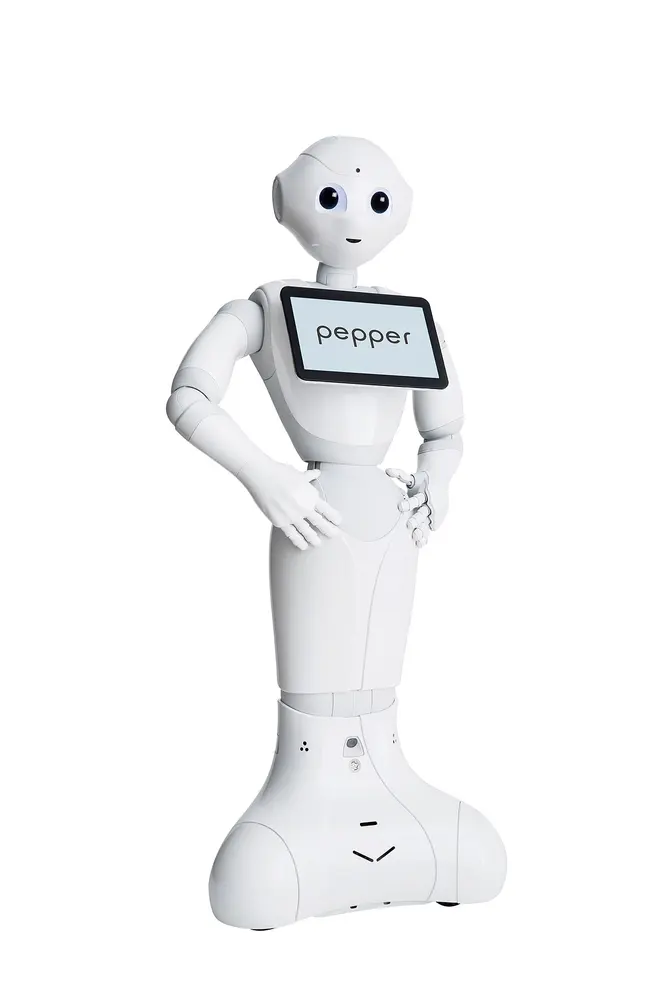 Wikimedia Commons · CC BY-SA 4.0
We have not sat down with this one. The score below is computed from the data we hold, and the facts on this page are sourced. It is not on sale, so there is nothing to recommend.
How the score is built
Capability is what the machine physically does. Value compares it with others at a similar price, not with the whole market. Buyability asks whether you can really order one. Ecosystem is the software and community around it. Proof is what it has done in the field, which is where most humanoids score badly and should.
What people buy instead.
- Status
- Discontinued
- Category
- service
- First revealed
- 5 June 2014
- Form
- wheeled-base
- Height
- 120 cm
- Weight
- 28 kg
- Payload
- n/a
- Degrees of freedom
- 20
- Battery
- n/a
- Runtime
- n/a
- Walking speed
- n/a
- Actuation
- electric
- Units deployed (est.)
- not disclosed
- Teleoperation
- no
Where it stands
Production paused in 2020 after about 27,000 units; support continued by Aldebaran; no new generation.
What stands out
- Launched 5 June 2014
- About 27,000 units built
- Production paused 2020
Hands, sensors, brain
- Sensors: cameras, 3D sensor, microphones, touch sensors, tablet
Price and volume
Japan launch price JPY 198,000 plus subscription (2015)
SoftBank confirmed in 2021 that about 27,000 units had been produced.
Where Pepper works.
| Customer | Site | Sector | Task | Since | Status | Units | Autonomy |
|---|---|---|---|---|---|---|---|
| HSBC | HSBC flagship branch, Fifth Avenue, New York, United States | other | Greeting customers and explaining banking services | Jun 2018 | ended | n/d | autonomous |
| Nestle Japan | Nescafe coffee machine counters in Japanese electronics stores, Japan | retail | Selling Nescafe coffee machines and talking to shoppers | Dec 2014 | ended | n/d | autonomous |
| SoftBank Mobile | SoftBank shops across Japan, Japan | retail | Greeting customers and explaining products in phone shops | Jun 2014 | ended | n/d | autonomous |
Milestones.
Pepper goes on sale to consumers in Japan and sells out in a minute
SoftBank sells the first 1,000 consumer Peppers in Japan in about one minute. Monthly batches of 1,000 units continue to sell out through 2015.
SoftBank and Aldebaran unveil Pepper
Masayoshi Son presents Pepper, a 120 cm wheeled humanoid designed to read emotions, priced at 198,000 yen. It becomes the most widely deployed service humanoid of the 2010s in shops, banks and hotels.
Japan built the first humanoids, then stopped shipping them
Japan has 24 humanoids and 12 makers in our record, more than any country except China and the United States. Two of the 24 can be ordered today, and both were first shown in 2009.
Startups, automakers, universities: who builds humanoids
108 makers, nine kinds. Startups hold 37 of the 44 humanoids you can order. Automakers, universities, big tech, conglomerates and NASA hold 45 robots between them and sell none of them.
A short history of the humanoid, from Elektro to the order button
Our record holds 111 dated milestones since 1939. Sixty-eight of them are from this decade, and what changed was not the walking. It was the price tag.
Where humanoids actually work: 52 deployments, counted
We track 52 humanoid deployments at named sites. Eighteen are in car plants, exactly half are live, and six say how many robots turned up. Those six add up to 41 machines.
Sources
- 01Pepper (robot)Wikipedia
- 02PepperAldebaran
Spotted a wrong price or a broken fact? Send a correction. Fixed within 24 hours when sourced.