Robonaut 2
Robonaut 2 was developed by NASA and General Motors and became the first humanoid robot in space when it launched to the ISS in February 2011. A leg set arrived in 2014 but hardware faults limited its use and it returned to Earth in 2018. Its dexterous hands influenced later industrial humanoids.
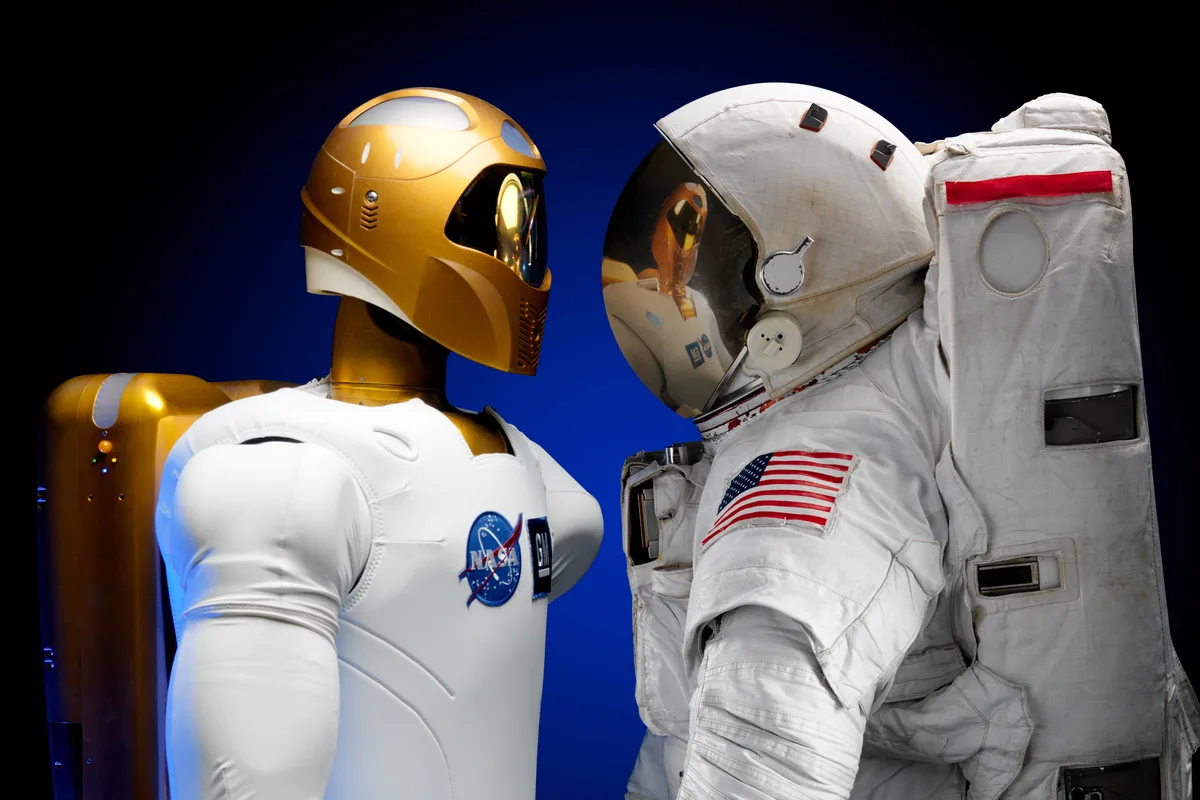 NASA (Johnson Space Center) press image
We have not sat down with this one. The score below is computed from the data we hold, and the facts on this page are sourced. It is not on sale, so there is nothing to recommend.
How the score is built
Capability is what the machine physically does. Value compares it with others at a similar price, not with the whole market. Buyability asks whether you can really order one. Ecosystem is the software and community around it. Proof is what it has done in the field, which is where most humanoids score badly and should.
What people buy instead.
- Status
- Retired
- Category
- research
- First revealed
- 4 February 2010
- Form
- upper-body
- Height
- n/a
- Weight
- 150 kg
- Payload
- n/a
- Degrees of freedom
- 42
- Battery
- n/a
- Runtime
- n/a
- Walking speed
- n/a
- Actuation
- electric, series elastic
- Units deployed (est.)
- not disclosed
- Teleoperation
- yes
Where it stands
Operated on the ISS 2011 to 2018, returned to Earth for repairs in 2018; no longer in active use.
What stands out
- First humanoid robot in space (2011)
- Joint NASA and GM development
- Returned to Earth 2018
Autonomy, observed
Performed task board and switch operations on the ISS; first humanoid robot in space (launched 24 February 2011 on STS-133).
Operated by ISS crew and ground controllers with supervised autonomy.
Hands, sensors, brain
- Hands: five-finger, 12 DoF per hand
Price and volume
government program
Where Robonaut 2 works.
| Customer | Site | Sector | Task | Since | Status | Units | Autonomy |
|---|---|---|---|---|---|---|---|
| NASA | International Space Station, United States | research | Testing dexterous manipulation and simple maintenance tasks in microgravity | Feb 2011 | ended | 1 | mixed |
Milestones.
NASA's Robonaut 2 launches to the International Space Station
Robonaut 2, built by NASA and General Motors, flies on shuttle mission STS-133 and becomes the first humanoid robot in space. It is later fitted with legs and returns to Earth for repairs in 2018.
Startups, automakers, universities: who builds humanoids
108 makers, nine kinds. Startups hold 37 of the 44 humanoids you can order. Automakers, universities, big tech, conglomerates and NASA hold 45 robots between them and sell none of them.
Where humanoids actually work: 52 deployments, counted
We track 52 humanoid deployments at named sites. Eighteen are in car plants, exactly half are live, and six say how many robots turned up. Those six add up to 41 machines.
Why hands are the hardest part of a humanoid
Of 182 humanoids on record, 96 describe their hands and 13 publish a degrees-of-freedom figure for them. The word dexterous appears 21 times and comes with a number once.
Other robots by NASA (Johnson Space Center).
Sources
- 01RobonautWikipedia
- 02Robonaut 2NASA
Spotted a wrong price or a broken fact? Send a correction. Fixed within 24 hours when sourced.