Sony QRIO
QRIO was Sony's 58 cm entertainment humanoid that became the first bipedal robot to run in 2003. Sony cancelled it in 2006 during restructuring.
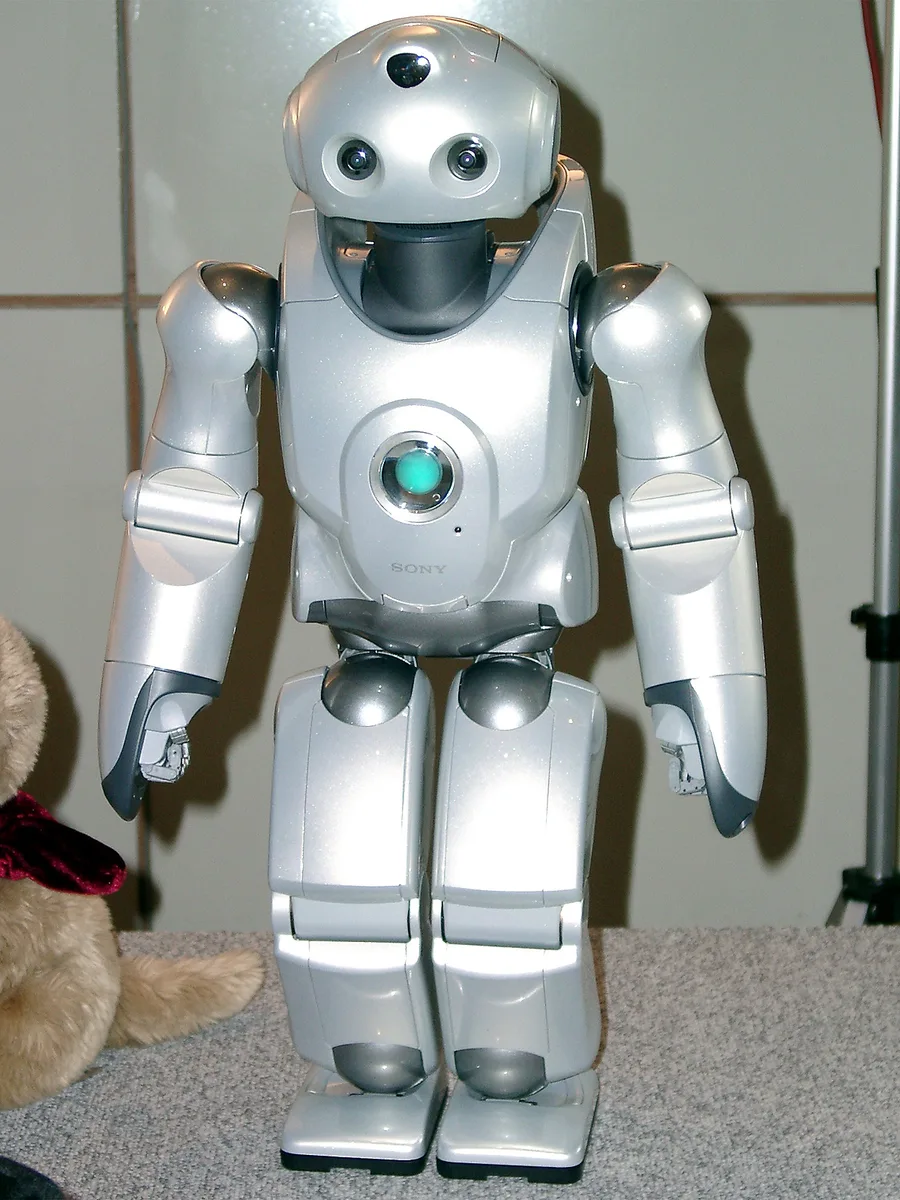 Dschen Reinecke via Wikimedia Commons · CC BY-SA 3.0
We have not sat down with this one. The score below is computed from the data we hold, and the facts on this page are sourced. It is not on sale, so there is nothing to recommend.
How the score is built
Capability is what the machine physically does. Value compares it with others at a similar price, not with the whole market. Buyability asks whether you can really order one. Ecosystem is the software and community around it. Proof is what it has done in the field, which is where most humanoids score badly and should.
- Status
- Discontinued
- Category
- historic
- First revealed
- 19 March 2002
- Form
- bipedal
- Height
- 58 cm
- Weight
- 7.3 kg
- Payload
- n/a
- Degrees of freedom
- 38
- Battery
- n/a
- Runtime
- 1 h
- Walking speed
- n/a
- Actuation
- electric intelligent servo actuators
- Units deployed (est.)
- not disclosed
- Teleoperation
- no
Where it stands
Small entertainment humanoid shown 2002 to 2005; Sony ended the program in January 2006 with AIBO.
What stands out
- First running biped, 2003
- Cancelled 2006
Autonomy, observed
First bipedal robot to run (December 2003), dancing, throwing balls.
Hands, sensors, brain
- Hands: five-finger hands
- Sensors: stereo cameras, seven microphones, touch sensors
- Compute: three 64-bit RISC processors
- AI stack: face and voice recognition, real-time gait control
Price and volume
Never sold.
Milestones.
Sony ends the QRIO and AIBO programs
Sony announces it will stop development of the QRIO humanoid and the AIBO robot dog as part of a restructuring. The decision removes one of the leading corporate humanoid programs of the era.
Sony names its humanoid QRIO
Sony renames the SDR-4X II entertainment humanoid QRIO and demonstrates running, the first bipedal humanoid claimed to leave the ground with both feet. QRIO was never sold.
Sony shows SDR-3X, its first small bipedal humanoid
Sony's Dream Robot SDR-3X is a 50 cm entertainment humanoid that walks, kicks a ball and dances. It leads to SDR-4X and the QRIO robot.
How long does a humanoid robot actually run
22 of 182 humanoids on record quote a runtime. The claims run from 1 to 8 hours with a median of 4, and of the 44 machines you can order, 4 say anything at all.
Japan built the first humanoids, then stopped shipping them
Japan has 24 humanoids and 12 makers in our record, more than any country except China and the United States. Two of the 24 can be ordered today, and both were first shown in 2009.
Startups, automakers, universities: who builds humanoids
108 makers, nine kinds. Startups hold 37 of the 44 humanoids you can order. Automakers, universities, big tech, conglomerates and NASA hold 45 robots between them and sell none of them.
Why hands are the hardest part of a humanoid
Of 182 humanoids on record, 96 describe their hands and 13 publish a degrees-of-freedom figure for them. The word dexterous appears 21 times and comes with a number once.
Sources
- 01QRIO, WikipediaWikipedia
Spotted a wrong price or a broken fact? Send a correction. Fixed within 24 hours when sourced.