Unitree G1 at $13,500: why the cheap one cannot run your code
The most sold humanoid in the world has a price that gets quoted everywhere and a configuration ladder that almost nobody reads. The version in the headline and the version in the lab are $30,400 apart.
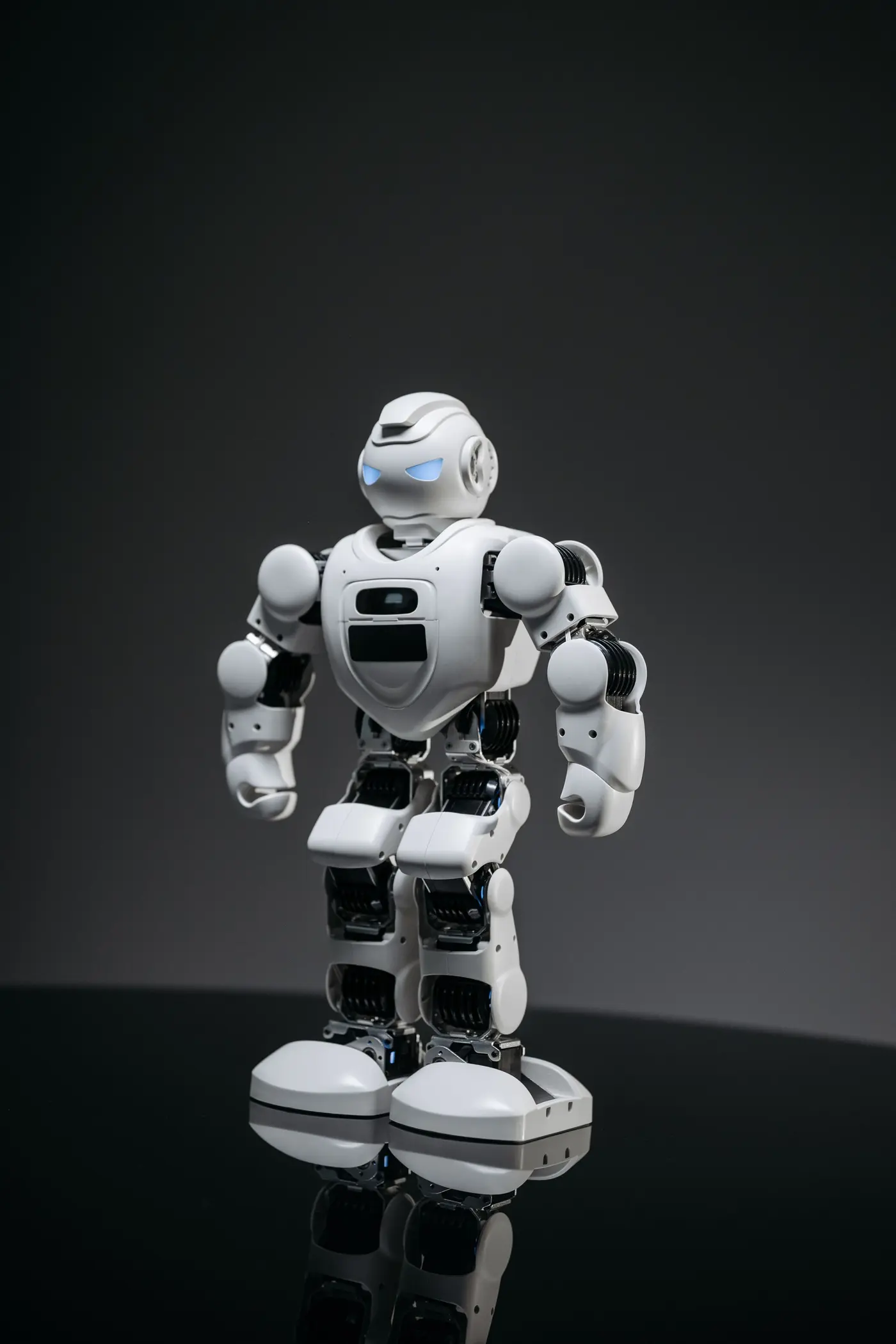
Unitree announced the G1 on 13 May 2024 at $16,000 and it is listed today at $13,500. That number did a lot of work: it made the G1 the default humanoid in university labs from Zurich to Shenzhen, and it is why the G1 tops our ranking with 77 out of 100. It is also not the price of the machine most of those articles are describing.
The ladder
Unitree sells the G1 in three configurations, and the store page is clear if you scroll:
| Configuration | Price | What it is |
|---|---|---|
| G1 standard | $13,500 | The machine in the headline. No secondary development: it is closed to your own code. |
| G1 EDU | $43,900 | Dexterous hands, Jetson Orin compute and the open SDK. This is the one the labs run. |
| G1 EDU Ultimate | $73,900 | The top configuration. |
The $13,500 robot walks, runs, gets up off the floor and does the demonstration routines. It does not run software you wrote. To teach it something, train a policy on it, or bolt it into your own stack, you need the EDU version, and that starts at $43,900. That is a factor of 3.3 between the price everyone quotes and the price a developer pays; the Ultimate is 5.5 times the headline price. Shipping adds $300 to $1,200, and the lead time reads “backordered, ships when restocked”.
What each rung adds
Compute. The standard G1 runs on an 8-core CPU. The EDU versions carry an Nvidia Jetson Orin NX rated at 100 TOPS. A learned policy does not run on the base CPU, and the standard configuration gives you no way to load one anyway.
Hands. The base G1 has 23 degrees of freedom and no hands. The EDU tiers add the Dex3-1 three-finger hand, 7 degrees of freedom each, or five-finger hands, for 43 in total. If your research is manipulation, the headline machine has nothing to manipulate with.
Access. The EDU tier is the one that supports secondary development, Unitree’s phrase for running your own code. The sensors on our record (RealSense D435i depth camera, Livox Mid-360 LiDAR, microphone array), the 0.75 kWh battery, two hours of runtime and 2 m/s walk are listed for the G1 as a whole, not per tier. What $30,400 more buys is a computer, a pair of hands and permission.
Open source, but not the way the word suggests
Unitree’s open-source work is real. Our record for the G1 reads: SDK, URDF models and RL training environments are open source; hardware is not. That is unitree_sdk2, unitree_rl_gym and the simulation models, and it is why more third-party code exists for the G1 than for anything else on our list. But the record’s open-source flag is false, because the machine is closed, and on the standard configuration even the software door is shut. “Open” attaches to the brand when it belongs to a tier; the 24 machines that claim the word are in our open-source guide.
The confusion persists because $13,500 is a remarkable number for a walking humanoid, and remarkable numbers travel, and because the trade press quotes the entry price and moves on: 26 of the 35 prices on our record come from reports, not from the maker’s page. The G1 is one of the eight with an official list, which is why we can show the ladder. Only five of our 42 buy records name configurations, twelve in total; the G1’s three are the widest spread.
What the G1 has done on record
Two deployments. The one that matters: universities and AI labs worldwide, active since August 2024, doing locomotion and manipulation research and teleoperation data collection, autonomy marked mixed. Unitree has published no unit count; the record notes reports of thousands sold since 2024. The second is a June 2025 China Mobile tender, where Unitree won the smaller lot, shared with AgiBot, for showroom and service machines; units and sites are undisclosed.
The G1’s teleoperation field reads partial. VR teleoperation runs through open-source projects such as avp_teleoperate, which is how much of the platform’s training data gets collected. The four G1s that boxed in Hangzhou on 25 May 2025 were teleoperated. The learned locomotion is the autonomous part: walking, running, standing up from the floor, the routines in many independent lab videos, the boxing at the World Humanoid Robot Games in August 2025.
The cheaper sibling
If you need locomotion to experiment with and no hands, look at the R1, announced on 25 July 2025 at CNY 39,900. It has its own ladder: R1-D at $4,290, a stripped configuration; R1 AIR at $4,900, the locomotion research build; R1 standard at $5,900, which adds manipulation. It is 121 cm and 25 kg with 26 degrees of freedom, an 8-core CPU with integrated GPU, and a Jetson option on an EDU variant our record does not price. Its price basis is reported, not official: it also sells through AliExpress and JD.com, where the number moves. Teleoperation is partial here too. No deployment on record yet; it scores 64, third among the machines you can order, and it exists because the G1 EDU costs what it costs.
What a lab actually needs
To run your own policy you need a robot that accepts your code, compute to execute it, a simulation model to train in, and a way to collect demonstrations. The open URDF and RL environments cover the third, free, on any G1; the teleoperation projects cover the fourth. The first two start at the EDU tier, $43,900.
If you want a humanoid that walks around a classroom, a lobby or a stage on Unitree’s own software, the standard G1 is the best value in the category, with nothing near it. If you want to build on it, price the EDU from the start and compare it against what $43,900 buys elsewhere. Several reports in 2025 called the G1 the highest-volume humanoid in the world. We believe that. We would just like the headline to say which G1.
Unitree G1
G1 is Unitree's compact humanoid, announced in May 2024 at USD 16,000 and now listed at USD 13,500. Its low price and open SDK made it the default research and education humanoid worldwide. Read the configuration carefully: the standard machine does not support your own code, and the EDU version that does starts at USD 43,900.
Unitree R1
R1 is Unitree's low-cost humanoid, launched in July 2025 at CNY 39,900. At roughly a third of the G1 price it pushed the entry price for a walking humanoid below USD 6,000.
Sources
- 01Unitree G1 product pageUnitree
- 02
- 03Unitree R1 product pageUnitree
- 04Humanoid robots for sale: 2026 guideThere's A Robot For That
- 05Humanoid robot prices, 2026 guideRobotSourced
How a humanoid robot works: actuators, compute, sensors and the model
Of 182 humanoids on record, 178 say what moves the joints and 43 say what computer is inside. The further a layer sits from the metal, the less the maker tells you about it.
Deposits, lead times and warranties: reading a humanoid order sheet
Of 42 buy records, 2 publish a deposit, 1 a warranty, 1 a shipping cost and none a lead time in weeks. The order sheet for a humanoid is mostly blank, and the blanks are where the money goes.
Open-source humanoids: what you can actually build
24 of the 182 humanoids on record call themselves open source. 15 publish hardware files and software, 3 name a licence, 12 can be ordered, and none of the four on preorder has any autonomy evidence yet.