iCub
iCub is the open-source child-sized humanoid developed by the Istituto Italiano di Tecnologia in Genoa from the EU RobotCub project (2004 to 2010). With 53 DoF and full-body tactile skin, it became a standard platform for cognitive robotics research, with dozens of units in labs worldwide. iCub3, a larger 125 cm version, was introduced in 2021.
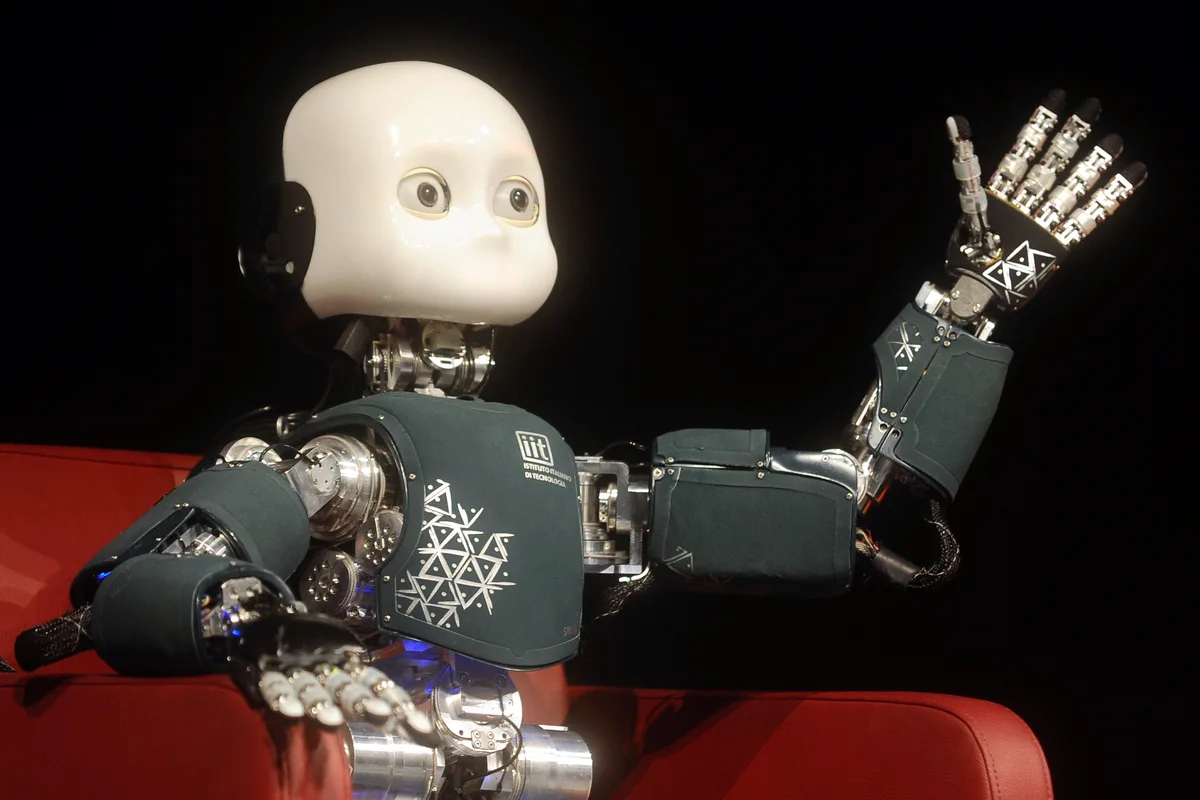 Niccolò Caranti via Wikimedia Commons · CC BY-SA 4.0
We have not sat down with this one. The score below is computed from the data we hold, and the facts on this page are sourced. It is not on sale, so there is nothing to recommend.
How the score is built
Capability is what the machine physically does. Value compares it with others at a similar price, not with the whole market. Buyability asks whether you can really order one. Ecosystem is the software and community around it. Proof is what it has done in the field, which is where most humanoids score badly and should.
What people buy instead.
- Status
- Research
- Category
- research
- First revealed
- 2008
- Form
- bipedal
- Height
- 104 cm
- Weight
- 33 kg
- Payload
- n/a
- Degrees of freedom
- 53
- Battery
- n/a
- Runtime
- n/a
- Walking speed
- n/a
- Actuation
- electric
- Units deployed (est.)
- not disclosed
- Teleoperation
- yes
Where it stands
Open-source child-sized research humanoid; dozens of units at labs worldwide; iCub3 introduced 2021.
What stands out
- EU RobotCub project origin (2004)
- 53 DoF, tactile skin
- Open-source hardware and software
- iCub3 (2021): 125 cm, 52 kg
Autonomy, observed
iCub3 has been used for VR avatar teleoperation (ANA Avatar XPRIZE).
Hands, sensors, brain
- Hands: five-finger, 9 DoF per hand
- Sensors: cameras, microphones, tactile skin, force and torque sensors
Price and volume
units built at cost for research partners; historically around EUR 250,000
Open source
Hardware designs and software are open under GPL and similar licenses.
Where iCub works.
| Customer | Site | Sector | Task | Since | Status | Units | Autonomy |
|---|---|---|---|---|---|---|---|
| Research institutes (various) | More than 30 laboratories in Europe, the US and Asia, Italy | research | Cognitive robotics and human robot interaction research | 2008 | active | n/d | mixed |
Milestones.
IIT presents iCub, an open source child sized humanoid
The EU funded RobotCub consortium led by the Istituto Italiano di Tecnologia presents iCub, a 104 cm humanoid with 53 degrees of freedom designed to study cognition. Hardware and software are open source and copies go to more than 30 labs.
Europe's humanoids: who builds them and what you can order
31 of the 182 humanoids on record come from seven European countries. Three can be ordered, two have a price, and the dearest of those is $75,000 for a robot that does not walk.
Open-source humanoids: what you can actually build
24 of the 182 humanoids on record call themselves open source. 15 publish hardware files and software, 3 name a licence, 12 can be ordered, and none of the four on preorder has any autonomy evidence yet.
Startups, automakers, universities: who builds humanoids
108 makers, nine kinds. Startups hold 37 of the 44 humanoids you can order. Automakers, universities, big tech, conglomerates and NASA hold 45 robots between them and sell none of them.
The uncanny valley, and why the newest humanoids have no face
Masahiro Mori warned in 1970 that a nearly human face repels. Of the 182 humanoids in our record, four describe one, and none of the four does physical work for a customer.
What humanoid robots can actually do in 2026
Of 182 humanoid robots on record, 117 have a human in the loop, 33 have ever worked at a customer site and none has a verified fleet count. Here is what that leaves.
Other robots by Istituto Italiano di Tecnologia.
ergoCub
ergoCub is a 150 cm humanoid developed by IIT with the Italian workers' compensation institute INAIL to study collaborative robots that reduce physical strain in hospitals and factories. It was presented in April 2023 and builds on iCub technology.
WALK-MAN
WALK-MAN was a large humanoid built by IIT with the University of Pisa and partners under an EU project for disaster response, and it competed in the 2015 DARPA Robotics Challenge finals. The project produced a second, lighter version in 2017.
Sources
Spotted a wrong price or a broken fact? Send a correction. Fixed within 24 hours when sourced.