44 you can order, 138 you cannot: the gap explained
We keep a record of 182 humanoid robots. Fewer than a quarter of them will sell you one, and of those, only eight tell you the price on their own website. Here is where the rest went.
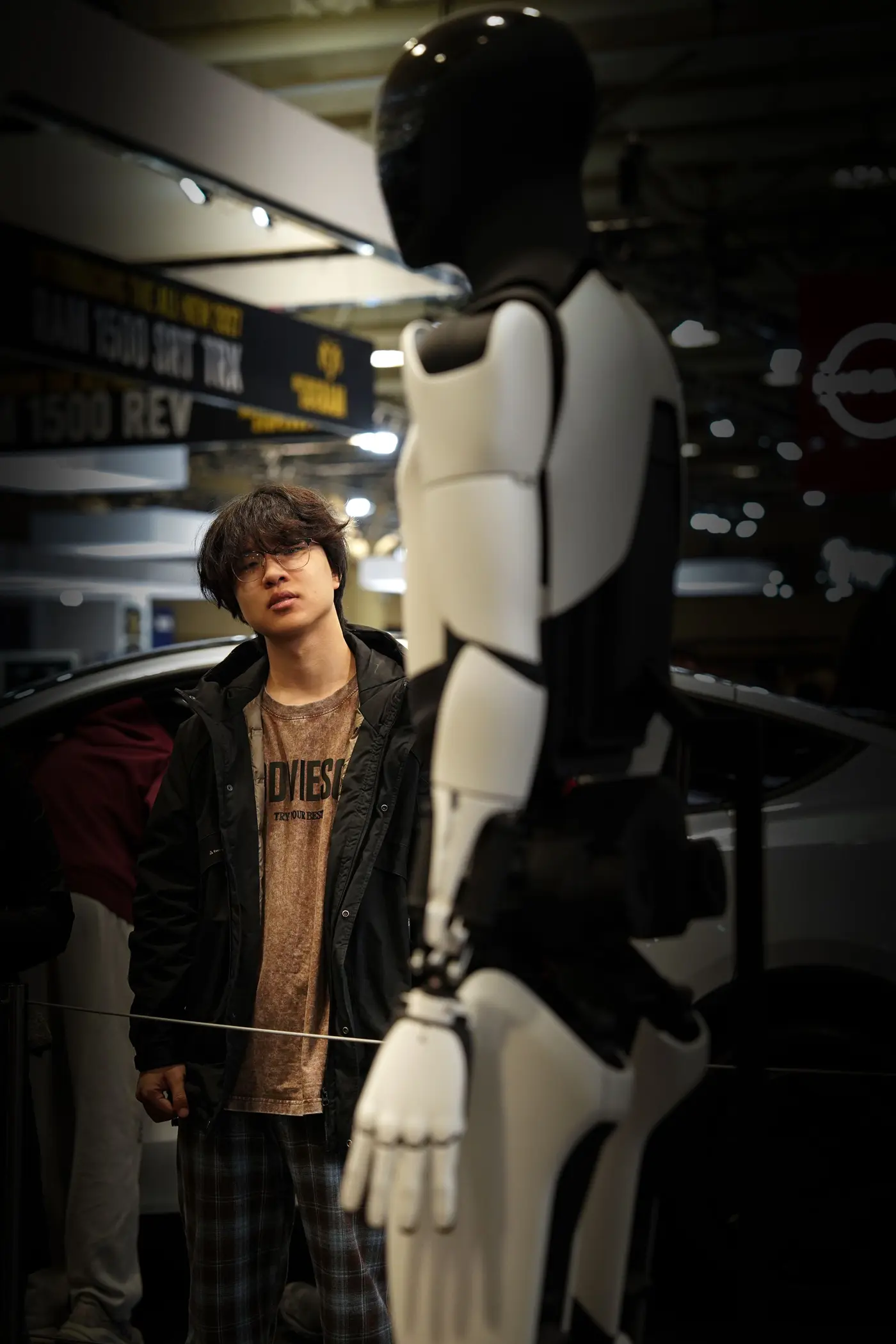
The most common question we get is some version of “which of these can I actually buy?” The honest answer is short, and the reasons behind it are the more interesting story. Here is the record of 182 machines, sorted by whether money can change hands.
The five piles
| Availability | Machines | What it means |
|---|---|---|
| Not for sale | 78 | Research platforms, prototypes and concepts. Many are real and walking. None has an order form. |
| Enterprise only | 40 | You can get one if you are a factory, a hospital chain or a logistics operator with a procurement team. There is no price, there is a sales call. |
| In stock | 34 | Orderable now, from a store page, a distributor or a marketplace. |
| Preorder | 10 | A price and an order button, and a delivery date that has not arrived yet. |
| Discontinued | 20 | Was for sale once. Includes some of the most famous names in the history of the field. |
In stock plus preorder is 44. That is the number on our homepage, and it is the whole buyable market as of 4 September 2026.
Sort the other 138 by status instead of availability and the shape is clearer. 48 are retired or discontinued: 33 retired, 15 discontinued. 25 are research platforms and 25 are prototypes, plus one concept. That leaves 39 machines that are, by their makers’ account, in pilot (13), limited production (13) or commercial use (13) and still cannot be ordered by you; 33 of them sit in the enterprise-only pile, which breaks down as 13 commercial, 12 limited production, 8 pilot, 3 prototype, 3 research and 1 retired.
Who is selling, and what
| Country | On record | Orderable | In stock | Preorder |
|---|---|---|---|---|
| China | 65 | 31 | 28 | 3 |
| United States | 44 | 5 | 0 | 5 |
| Japan | 24 | 2 | 2 | 0 |
| South Korea | 9 | 3 | 3 | 0 |
| France | 8 | 2 | 1 | 1 |
| Poland | 2 | 1 | 0 | 1 |
Of the 44, 31 come from Chinese makers. The United States has 44 machines on record, as many as the whole buyable market, and not one is in stock; its five orderable humanoids are all preorders. Of the other 39 American machines, 28 are not for sale, 5 are enterprise only, 6 are discontinued. China’s 34 unsold machines split the other way: 18 enterprise only, 14 not for sale, 2 discontinued. Japan built 24 humanoids and sells 2. The United States builds humanoids and, with a few exceptions, does not sell them to you. China does both.
The category field says what the 44 are for. 19 are research platforms, out of 69 in that category. 11 are education machines, out of 14, the only category where most of the record is for sale. All 4 platforms, meaning bodies sold for you to build on, are orderable. Then it thins out: 4 of 26 general-purpose machines, 3 of 6 home machines, 2 of 18 industrial, 1 of 20 service. None of the 19 historic, 4 entertainment or 2 logistics machines can be ordered. The humanoid you can buy is, overwhelmingly, a research or teaching body.
What they cost, and how we know
Our buy records cover 42 machines and hold 35 prices, from $299 to $250,000 with a median of $15,000. But 8 of those 35 prices belong to enterprise-only machines, and the $250,000 at the top is our own estimate for Agility’s Digit, a retired version whose successor is rented, not sold. Restrict the count to the 44 orderable machines: 28 have a buy record, 27 have a price, and the range is $299 to $70,000 with a median of $7,999. Seven are under $1,000. Fourteen are under $10,000. Two are $50,000 or more. Sixteen orderable machines, from AgiBot Genie G1 to Tiangong 2.0, have no price we can point at.
Now the uncomfortable part. Of the 27 prices among the 44, only 8 are official, meaning they appear on the maker’s own page. 19 are reported: the number exists because a journalist or a distributor published it, not because the maker did. Across the whole buy file it is 8 official, 26 reported, 1 estimate, and 7 records that are a quote request with no number at all. Every price on this site carries this label, because a price you cannot verify at source is a rumour with a dollar sign.
Where you buy follows the same pattern. Of the 28 orderable machines with a buy record, 17 sell through the maker’s own store, 7 through distributors, 3 through marketplaces, 1 through a waitlist. All 8 sales-contact records in the file belong to machines outside the 44.
Names on both sides
On the buyable side, the Unitree G1 at $13,500 is in stock, official price, official store, often backordered; its teleoperation is partial. NEO from 1X is $20,000 on preorder with US deliveries stated for 2026, and its teleoperation is yes. Reachy Mini is $299 on preorder from Pollen Robotics, and the Robosen K1 Pro is $299 in stock. Both are desktop machines.
On the other side, Tesla’s Optimus V3 is a prototype with no consumer order path. Figure 03 is in limited production at Figure’s BotQ plant, used in partner deployments only; its teleoperation field reads no. Boston Dynamics’ electric Atlas is in pilot with Hyundai, teleoperation partial, with deliveries to select early adopters stated for 2027. And ASIMO, the most famous humanoid built, is discontinued: Honda ended development in 2018.
Why the gap will not close quickly
It is tempting to read 44 out of 182 as a market about to open. Some of it will. But the 78 “not for sale” machines are mostly not products waiting for a launch date: 24 are retired and 22 are research, and research does not become a catalogue entry. The 40 enterprise-only machines may never get a public price, because their makers have decided the buyer is a fleet operator, not a person. The realistic near-term growth is in the preorder pile, the ten machines that promised a date, five of them American. Watch whether those dates hold. On this site, a delivery date that slips moves the score, and so does one that is kept.
If you are deciding whether to wait for a famous name or buy what is on the shelf: the famous names are in the 138, the shelf is 31 Chinese machines and a handful of preorders, and only eight prices can be trusted at source. We will run this count again when the record changes. The data behind every number is downloadable, under CC BY 4.0, from the data page.
Unitree G1
G1 is Unitree's compact humanoid, announced in May 2024 at USD 16,000 and now listed at USD 13,500. Its low price and open SDK made it the default research and education humanoid worldwide. Read the configuration carefully: the standard machine does not support your own code, and the EDU version that does starts at USD 43,900.
NEO
NEO is 1X's consumer home humanoid, opened for preorder on 28 October 2025 at USD 20,000 with deliveries planned for 2026. It is about 30 kg, tendon-driven and wears a soft suit, and it uses remote human operators for tasks it cannot yet do autonomously. It is the first humanoid marketed directly to households at a published price.
Reachy Mini
Reachy Mini is a desktop-size expressive robot head and torso from Pollen Robotics, now part of Hugging Face. It is not a walking humanoid, it is the cheapest legitimate way to start building with the open embodied-AI stack that runs on its full-size sibling Reachy 2.
Robosen K1 Pro
The K1 Pro is a programmable walking toy robot with 17 servos and app-based coding. It is the cheapest thing in this catalogue that walks on two legs unaided, and it is a toy, sold as one.
Optimus V3
Optimus V3 is the version Tesla describes as production-intent, with a new 22 DoF hand and forearm and a factory line in Fremont planned for 2026. Musk has repeatedly said V3 would be unveiled in early 2026 and that volume production is targeted for later in the decade. Tesla has stated a long-term ambition of one million units per year.
Figure 03
Figure 03 is Figure AI's third-generation humanoid, unveiled on 9 October 2025 and designed for the home and for volume manufacturing at Figure's BotQ facility. It has soft textile coverings, wireless charging, palm cameras and tactile fingertips, and runs the Helix model onboard. It is the company's first robot designed for mass production rather than hand assembly.
Atlas (electric)
The electric Atlas, revealed on 17 April 2024, replaced the hydraulic Atlas with a fully electric design whose joints rotate through 360 degrees. Boston Dynamics is developing it as a commercial factory robot with Hyundai Motor Group and using large behavior models from Toyota Research Institute and Google DeepMind. A production-intent version was unveiled at CES in January 2026.
Digit (v1 to v3)
Digit added a torso, arms and perception to the Cassie legs and was first shown in February 2019. Ford bought the first two units in 2020 for last-mile delivery research, and v2 and v3 added better perception and hands-free manipulation of totes. These versions were superseded by the 2023 Digit.
ASIMO
ASIMO, unveiled by Honda on 31 October 2000, was the best known humanoid of its era, evolving through several versions until the 2011 model that ran at 9 km/h. Honda ended development in 2018 and retired the robot from public shows in 2022.
Sources
- 01Unitree G1 product pageUnitree
- 02NEO1X Technologies
- 03Hugging Face's open-source desktop Pollen robot starts at $299Association for Advancing Automation
- 04
- 05
- 06Introducing Figure 03Figure AI
How long does a humanoid robot actually run
22 of 182 humanoids on record quote a runtime. The claims run from 1 to 8 hours with a median of 4, and of the 44 machines you can order, 4 say anything at all.
Startups, automakers, universities: who builds humanoids
108 makers, nine kinds. Startups hold 37 of the 44 humanoids you can order. Automakers, universities, big tech, conglomerates and NASA hold 45 robots between them and sell none of them.
China builds, America demos: what 108 makers tell you
Chinese makers account for 65 of the 182 humanoids in our record and 31 of the 44 you can order. American makers hold the money, the research and most of the autonomy claims, and sell you almost nothing.